The short answer, Yes!
You can fully charge an electric car with solar energy. You’ll need to install Solar Photovoltaic System (Solar PV), along with the EV charger for the car battery. Solar panels and electric vehicles are a perfect match.
Solar PV systems generate electricity from the sun, which can then be used to charge an electric car or anything else in your house. Solar PV systems can generate anything from two to ten+ kilowatts of power (kWp). The high end is enough to fully charge an electric car with a battery capacity of 40 kWh in 4 hours or less.
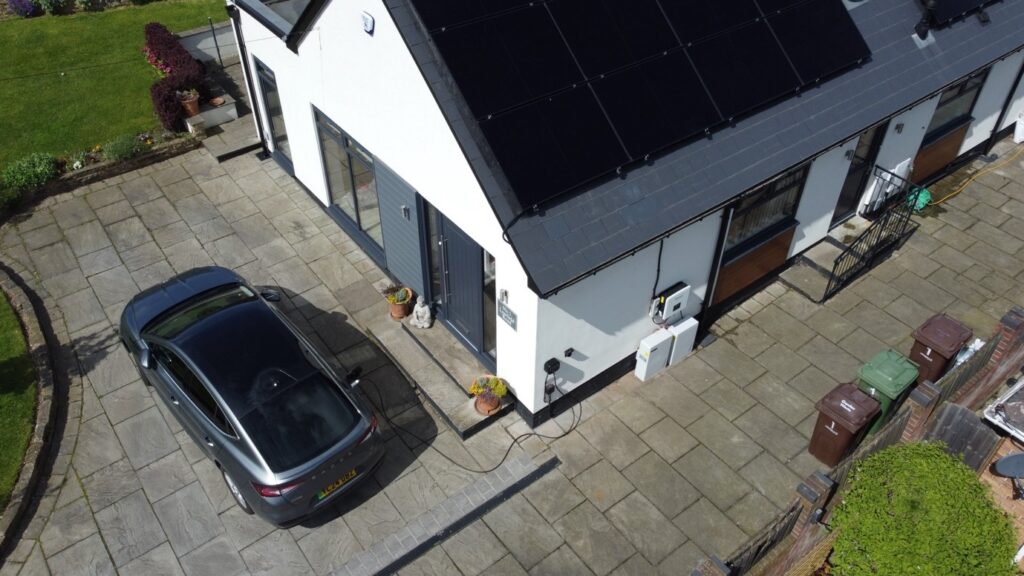
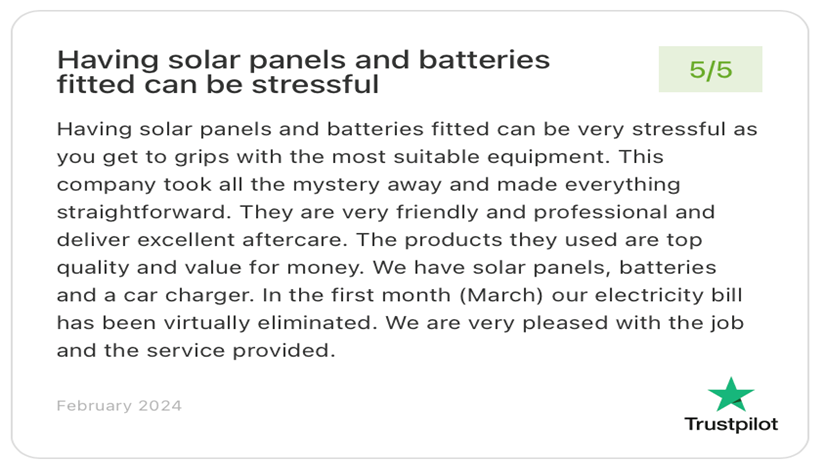
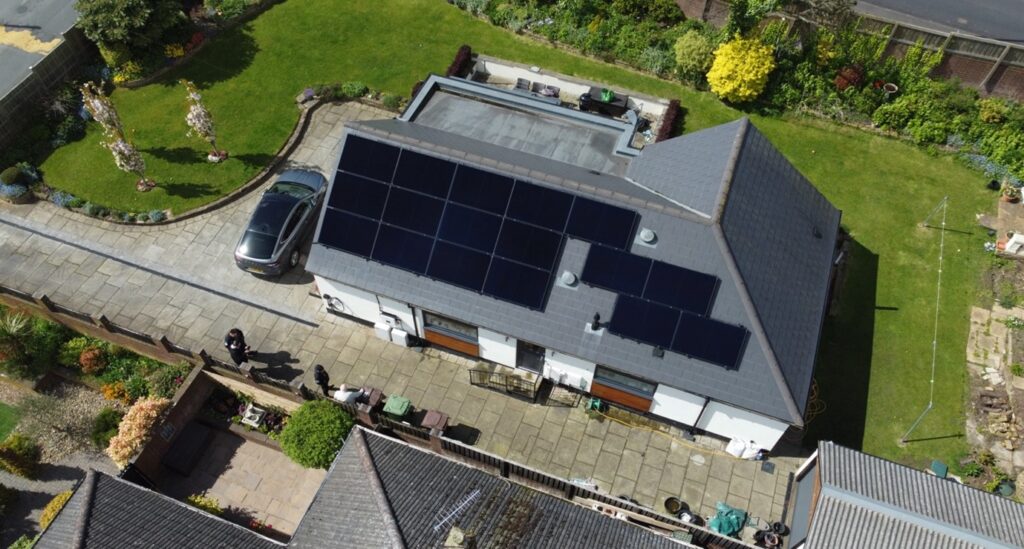
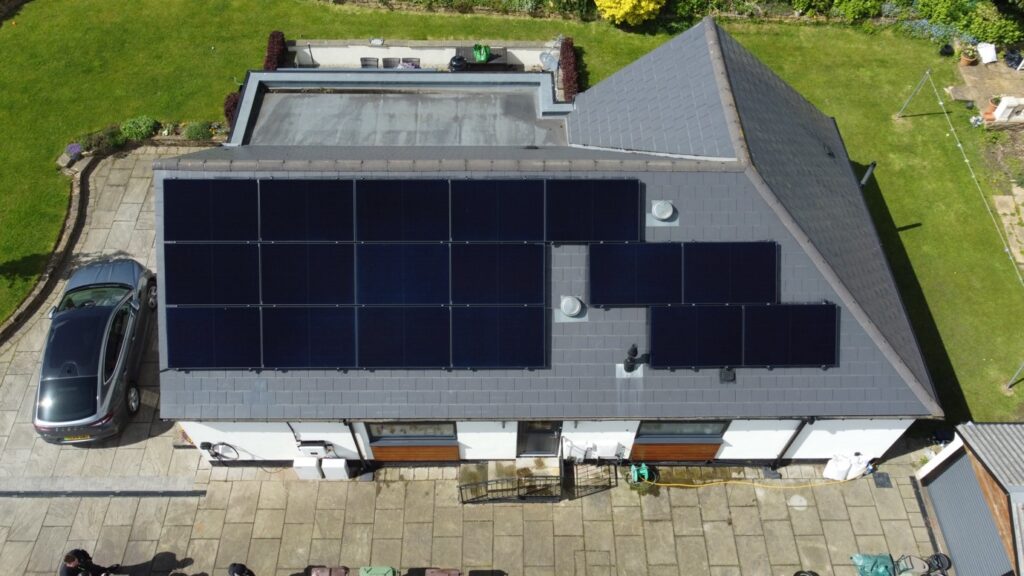
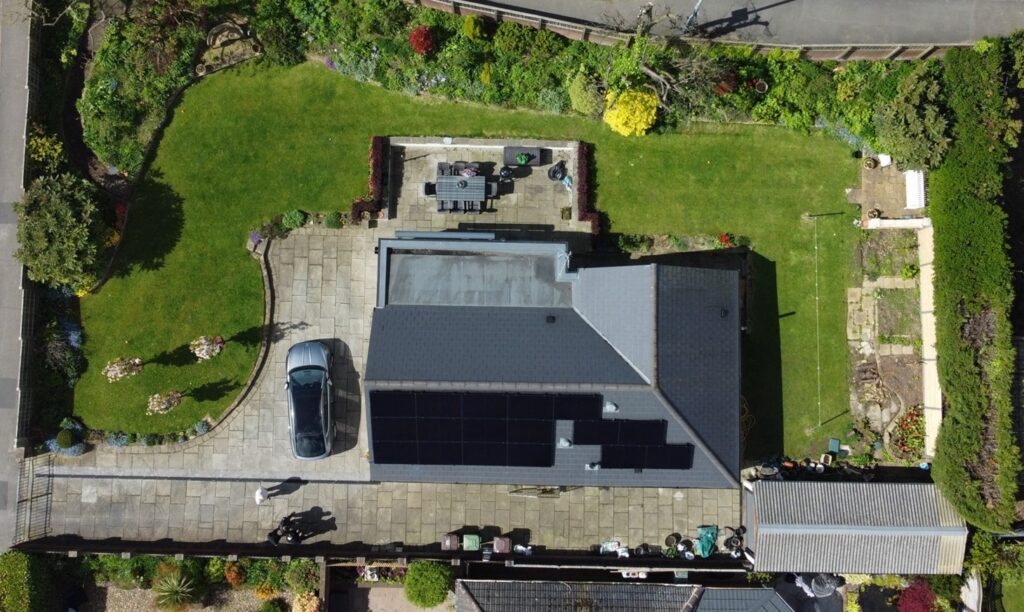
We have used a case study from one of our recent installations to showcase how your solar installation can charge your EV car for free.
The amount of solar energy available to charge an electric car varies depending on the time of year and the weather conditions. In winter, when there is less daylight and more cloud cover, you may need to supplement your solar PV system with power from the national grid.
We can set up your system to charge from the national grid over night at off peak rates to save you money when conditions are poor.
Solar energy is a great way to charge an electric car in a sustainable way, even if you only partly charge the car.
How many solar panels do you need to charge a car?
Generally, larger batteries need more panels. If you’re looking to install a solar PV system specifically for charging your car, it’s best to speak to a professional about the right size and type of system for your needs.
On average, a solar panel system with around 8-12 panels can power an electric vehicle – check this with your solar installer to get accurate figures for your property.
Can you use a regular EV charger with solar panel charging?
Yes, you can use a regular EV charger to charge from solar panels. You will need a PV inverter unit that converts solar energy in order to start charging your EV with solar panels.
Solar PV installations will have an inverter as standard but it’s important to check. The inverter is what changes the current from DC to AC so you can use electricity from the panels to power your home and devices. EV home chargers takes the AC and converts it back to DC to then charge the car.
Solar panels generate power in daylight hours, most people want to charge their cars in the evening or over-night. If this is the case, you can use a battery storage system to release the stored energy later on to help charge your EV.
If you do need to charge overnight from the grid, we can set up your system to only charge at off peak times at a lower cost.
Utilise your EV’s maximum potential with bidirectional charging
It is also possible with certain systems to use the EV battery to supply your home.
These EV charge points change your EV into a battery storage system that supplies your property with clean & cheap electricity for up to 3 days. The software coupled with an application you can have on your phone allows you to access your energy when needed.
- Power your home with your EV during peak hours to reduce bills
- Charge when energy is cheapest then use it to power your home or sell it to the National Grid to maximize savings & benefits (SEG)
- Store solar energy and power your home sustainably, increasing in dependence from the grid.
- Use interactive and easy to use applications on your phone or other devices, this allows you to set charging times across your property to maximise the effectiveness.
- Applications give you live, up to date information on your homes energy so you know exactly how you’re system is working for you at the touch of a button, where ever you are.
- Buy from the grid at the cheapest prices and sell it back at peak hours to save & make you money.
Is planning permission necessary for solar panels & EV charge points?
Installing solar panels on your home falls under the category of “Permitted Development,” meaning that typical solar panel setups do not require planning permission.
However, if your residence is listed, situated within a world heritage site, or if the installation deviates from standard guidelines, then obtaining planning permission is advised.
Its always a good idea to speak to a expert- If you are looking into getting solar panels & a EV charge point we would come and fully survey your property, answering all questions ahead of time and supporting you throughout the process.
Smart export guarantee (SEG)
The Smart Export Guarantee scheme is a government initiative that allows smaller-scale and low-carbon electricity generators to offer an export tariff to their customers. Using this, they can get paid for any energy they send back to the grid.
The SEG came into effect on the 1st January 2020, and currently has no end date. Suppliers with more than 150,000 customers are required offer the tariff, whilst smaller providers have the option to.
Any household with solar panel systems are eligible, although they must have a smart metre to measure the exports.
Always speak to a expert about what options are available, our team can guide you through what the best options for you and support you in the process.
0% VAT
From April 2022, the government introduced zero VAT on the materials and installation of any measures to improve the energy efficiency of a home.
This applies not just to solar panels, but also heat pumps, insulation, and other energy-saving systems, with only one or two specific requirements for households to be eligible.
The reduction only runs for five years (until April 2027), after which the VAT rate will return to its standard 5% rate.
Pros of installing solar panels to charge your EV:
- Solar panel charging is good for the environment. Electric cars are much cleaner than petrol or diesel cars.
- If charging from the National Grid, the energy used is likely to not be from a renewable source. About 25% of our energy is still produced from gas, as such the EV’s environmental benefits are reduced. Solar panel charging helps to maximise the environmental benefits of driving an electric car.
- Once you’ve installed your solar PV system, it will continue to generate electricity for years to come with little maintenance needed.
- Depending on your energy usage and style of property, you have the potential to be net 0 cost on energy bills between you savings and benefits.
- Energy Saving Trust estimates that a typical home solar PV system could save around one tonne of carbon per year.
- The Energy Saving Trust estimates that an average 4kW solar array in the UK will save you over £400 a year, depending on your system savings can be far greater!
- Solar panel charging is cheaper than grid electricity. In most cases, the cost of generating your own solar power is lower than buying power from the grid. This means that you could save money on your EV charging costs in the long run.
- Solar PV systems can generate enough electricity to fully charge an electric car. A typical domestic solar PV system can generate around four kilowatts of power, which is enough to charge an electric car.
- Domestic solar PV systems can bring you savings on your energy bills. Not only can you save money on your EV charging costs, but if you generate more electricity than you use, you can sell it back to the grid and reduce your overall energy costs.
- Secure independence from ever rising energy bills
- Using a reliable installer with Membership and certification with key industry bodies e.g. MCS accreditation, RECC and NAPIT ensures the quality of the information you are being provided
- Costs of charging are often much lower versus traditional fuels used to power cars with internal combustion engines, especially when charged at home
- Maintenance costs are typically lower for EV’s as their drivetrains are simpler, and new technologies make batteries last even longer
- In the UK, EV’s do not need to pay anything to tax their vehicles, the annual VED is provided free of charge.
- New EVs have a 100% capital allowance write off. Meaning that the cost of the car can be written off against tax adjustable profits in year one.
In conclusion;
Yes, you can run your electric car for free with a solar panel installation.
The world is steadily moving away from carbon-reliant energy. Renewable sources such as solar will play a increasingly crucial part in our energy supply, Solar power is a great way for homes to reduce energy costs. Gain independence from the grid and guarantee sustainable electricity.
There are many case studies evidencing this, always speak to a solar expert first in order to get a clear picture of what this would look like for you!
Testimonial;