AIR SOURCE HEAT PUMPS

A great low carbon alternative to gas central heating systems

CALL BACK REQUEST

AIR SOURCE HEAT PUMPS

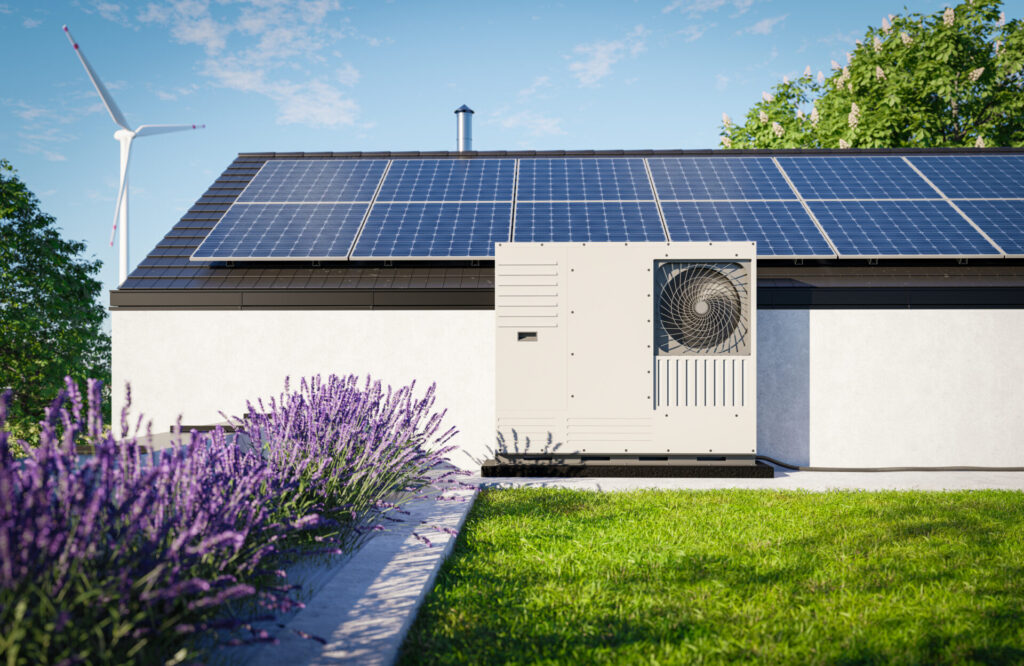
Air source heat pumps are a great low-carbon alternative to gas central heating systems for both heating and hot water. They work by extracting the heat from outside air using a compressor and a refrigerant to turn it into usable energy for your home.
Reasons to get an Air Source Heat Pump

Provide Heating and cooling.

Heat Pumps can provide both heating and cooling at the touch of a button

Heat Pumps have high energy efficiency ratings.

Our heat pumps have some of the highest efficiency ratings on the market, so you know that you have the most efficient system available.

One factor to consider is the how much time you are home during the day, the more electricity you use the quicker you will see the return on investment. It’s important to balance the energy you use, trying to use the most electricity during the day.

Reduce your energy bills.

Getting an Air source heat pump installed means that you can avoid the volatile prices associated with gas and oil. The heat pump will use electricity but when paired with a solar installation can reduce your energy bills massively.

No VAT to pay.

The government has recently reduced VAT on all air source heat pumps to 0% reducing the cost of installation considerably.

Reduce your carbon footprint and combat climate change

Air-source heat pumps are significantly more efficient than traditional gas boilers. Installing an air-source heat pump will reduce your home’s carbon footprint.

Helps with condensation in your home

An Air Source heat pump will take moisture out of the air reducing condensation and mould in your home.

How do Air Source Heat Pumps work?

Air Source Heat Pumps use the same technology as an air conditioner. The only difference between an air conditioner and a heat pump is that the heat pump has a reversing valve which changes the flow. This means that when you require heating in the home the hot air is absorbed from the outside air and is increased inside the air source heat pump to be used inside the home. When the home requires cooling this process is then reversed so that the heat pump removes the hot air from inside the home and blows cold air into the home.
Step-by-step process

1

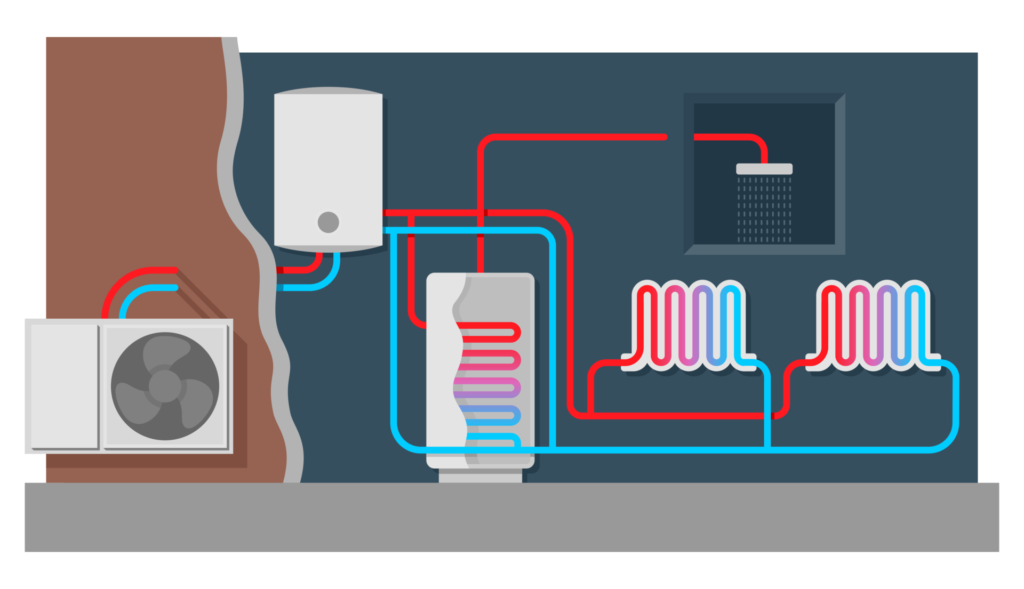
Heat is taken from the air outside and it is pumped or blown over a heat exchanger inside of the Air Source Heat Pump.

2

The heat is enough to warm the refrigerant inside causing it to evaporate into a gas.

3

The refrigerant gas then goes into a compressor causing the pressure and temperature to rise.
4

The compressed hot refrigerant is then passed over another heat exchanger. This heat can be now blown into the home to heat it or transferred into a central heating system to heat the home using conventional radiators.

5

As the heat is transferred into the home the temperature of the gas falls causing it to return to a liquid state.

6

The cycle then continues again until your home reaches the required temperature.

Frequently Asked Questions ON AIR SOURCE HEAT PUMPS

Once we have carried out a survey and completed the heat loss calculations a report is then compiled detailing the system size and the estimated running costs of the system. If you would like to go ahead with the installation the average installation time is around 3-4 days.
The cost of an air source heat pump depends on the size of the heat pump required. Prices start from £5999 for installation on smaller properties and increase depending on the size of your property. This price does not include the £7500 grant available.
The average lifespan of an air source heat pump is similar to a modern boiler. This is around 15 years but annual maintenance can significantly improve the lifespan of your air source heat pump installation.
The maintenance schedule of an air source heat pump is similar to a normal modern boiler. It is advisable to have an annual service to ensure that your warranty is valid and to ensure that the air source heat pump is working as efficiently as possible.
An air source heat pump can be used to provide heating and hot water any time of the day or night. The air source heat pump will work just like a conventional gas boiler providing your heating and hot water 24 hours a day.
The air source heat pump has a controller just like a conventional boiler. This controller can set the heat pump to heat your house to a desired temperature for specific times and dates.
Modern air-source heat pumps tend to be quieter than traditional boilers.
Air source heat pumps run at lower flow temperatures than a traditional gas boiler resulting in greater efficiencies. For most cases, your existing pipework will be adequate. Older properties can have single panel radiators which have less heat output. If your property has single panel radiators we would need to upgrade them to modern double panel radiators.
Air Source heat pumps are the most efficient way to heat your home. Getting an air source heat pump installed can offer large savings for properties that are heated using oil or LPG. When changing an existing oil or LPG boiler to an air source heat pump the savings on average are around 30% on your fuel bills.
Air source heat pumps remain efficient in cold temperatures and can continue to function at temperatures as low as -20°C. The average temperature in England in winter is around 3°C with lows around -7°C so the air source heat pump will continue to operate without a problem on even the coldest of winter days.
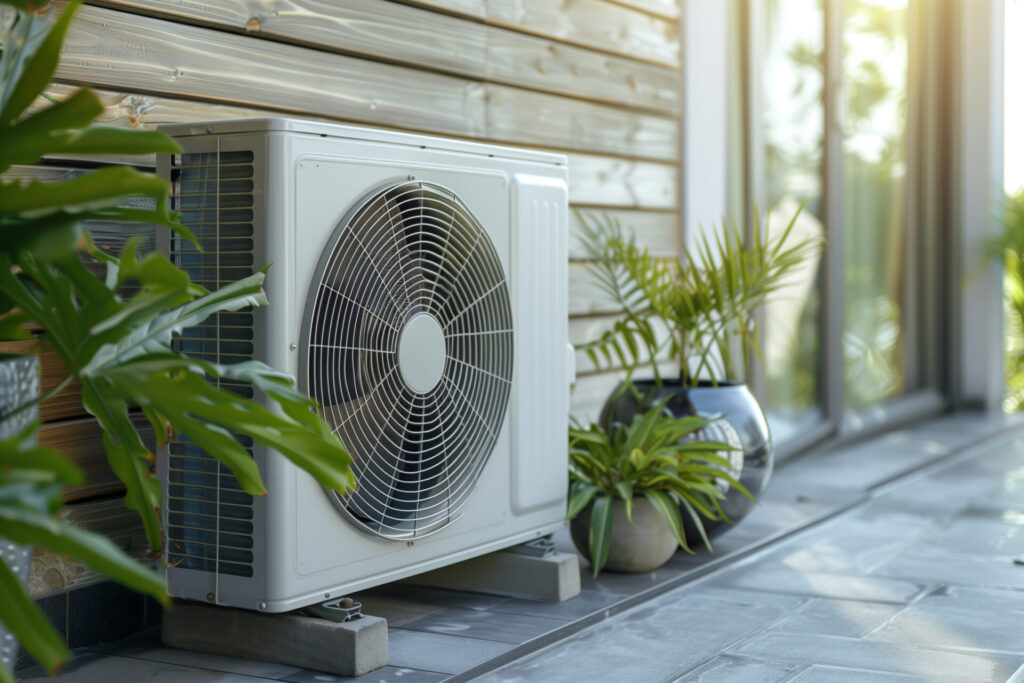
Air source heat pumps don’t take up much space. The average size of the external unit is around 1m x 1m, this unit will be installed outside against an external wall. The new cylinder is roughly the same size as your existing cylinder and will replace the existing one
An Air source heat pump works by absorbing the heat from the outside air and increasing the temperature to be used to heat the home or provide hot water.

They work by extracting the heat from outside air using a compressor and a refrigerant to turn it into usable energy for your home. The process is similar to air conditioning systems by transferring air between outside and inside of the building to either heat or cool the building accordingly. There are two types of Air source heat pump which are available, these are Air to Air and Air to Water. The Air to Air system works by taking heat from the outside air and increasing the temperature of the air and then heating the building by circulating that hot air around the building. Air to Water systems work by extracting the heat from outside air and then increasing the temperature and then the system can heat the building using hot water fed to your radiators and also from circulating the hot air around the building like in the air to air example.

Yes, because an air source heat pump does not combust fossil fuels the C02 emissions are nearly zero. The unit does use some electricity but when paired with a solar installation enables the unit to have virtually no carbon emissions.
Whether your property is suitable for an air source heat pump depends on several factors such as how well your property is insulated. The better the property is insulated the better the heat pump will perform. You will also need a little space outside of your home for the heat pump to be installed. This area is roughly 1m x 1m against an outside wall to house the external unit.
Yes, all models of air source heat pumps that we install are MCS approved.
The electricity consumption inside of your property will increase when you have an air source heat pump installed. This increase in electricity usage is offset because you will not be buying oil or gas to heat your home. If paired with a solar panel installation the running costs of an air source heat pump could be virtually eliminated.
Yes, air-source heat pumps can be installed with conventional radiators. The radiators must be correctly sized for the reduced water flow temperature.
To provide the same heat output as a conventional gas or oil boiler the radiators on an air source heat pump system are typically around 2.5 times larger.
In the UK air-source heat pumps are starting to become very popular due to there efficiency and their low environmental impact. There is also grant funding available which also adds to their popularity.

Which Package Is Right For Me?