

What is the feed-in tariff scheme?
The Feed-in-Tariff scheme was a government initiative that paid people in England, Scotland and Wales for the renewable electricity generated at their homes. It was designed to promote the uptake of renewable and low-carbon electricity generation. The scheme started on 1st of April 2010 and was closed to new applicants in 2019 but anyone who signed up before 2019 still receives their payments. The payments are tax-free and are paid 4 times a year over a period of 20 years.
It worked by calculating the payments based on the generation meter readings that you submitted to your supplier and the amount of electricity that you have exported to the grid. Because you receive a payment for electricity generated and some of this is used in your home and not exported to the grid you are paid for the electricity used by you in the home too.
The renewable energy technologies that could apply for Feed-in-Tariff payments are,
- Solar Photovoltaic (Solar PV)
- Wind
- Micro combined heat and power (Micro CHP)
- Hydro
- Anaerobic digestion (AD)
Installations could have a capacity of up to 5 Megawatts (or 2 Kilowatts for Micro CHP).
There are two types of participants in the Feed-in-Tariff scheme.
- FIT generators who are the owners of the accredited installation.
- FIT Licensees are the electricity suppliers that register the applications and make FIT payments for the electricity generated by the accredited installations.
The Feed-in-Tariff generators are registered with their choice of Feed-in-Tariff licensee. When this had been completed the installation was then eligible to receive the quarterly payments for the electricity that the registered installation generated and exported. These payments are calculated based on meter readings that the Feed-in-Tariff generators submit to their FIT licensee.
FIT generators receive support for up to 25 years depending on the type of technology, capacity, date of commissioning of the Feed-in-Tariff installation and whether it was previously accredited under the Renewables Obligation scheme.
The administration of the Feed-in-Tariff scheme is shared between Ofgem and the Feed-in-Tariff licensees. Much of the day-to-day administration of the scheme is done by the FIT licensees. Their responsibilities include,
- Making the Feed-in-Tariff payments to the owner of the FIT installation.
- Taking and verifying of customer meter readings
- Handling any complaints received.
- Updating of generator details.
The roles of Ofgem in the Feed-in-Tariff scheme are,
- Running the Central Feed-in-Tariff register and the Renewables and CHP Register which is the database of all the accredited installations.
- Publishing reports and data
- Processing of ROO-FIT applications
- Managing fuelling and sustainability requirements for AD installations
- Running the levelisation process
- Making sure that suppliers comply with the Feed-in-Tariff scheme requirements.
Can I add more solar panels to my feed-in tariff installation without affecting my payments?
Adding more solar panels to your FIT installation without affecting your current payments is possible. It will mean that you will increase the amount of electricity that you export to the grid which will improve the amount paid to you for any export payments. The new extra capacity cannot be added to your generation payments so this payment would be unaffected by the increase in capacity from the additional solar panels.
Another way to add more solar panels to your property without affecting the Feed-in-Tariff scheme or any payments made is to install a second system with its own inverter and generation meter. This new system would be separate from the FIT installation and could be eligible for Smart-export-Guarantee (SEG) payments as long as it was installed by an MCS-registered installer.
If you are replacing damaged or broken equipment you should speak to your Feed-in-Tariff licensee as soon as possible to find out how it will determine how it might affect your FIT payments.
What happens when you would like to add battery storage to your Feed-in Tariff installation?
This depends on what type of battery you would like to have installed. The two types of batteries available on the market are DC-coupled and AC-coupled. The difference is that AC-coupled batteries are separate from the existing Feed in Tariff solar installation and are on its own dedicated circuit. The output from the batteries is already converted to AC power to be fed directly into your home. This means that the battery will not be affecting the meter that was installed with the Feed-in tariff installation so this type of system will not affect your FIT payments.
When you are adding DC-coupled batteries to your existing Feed-in-Tariff solar installation the connection of the batteries is at the DC side of the inverter with the input from the solar panels. It is only being converted to AC electricity when it is required. For this reason, the maximum output from the solar and battery is limited to the size of the inverter output. This can be more complicated and at times more costly since most Feed-in-Tariff solar installations have string inverters where there is no input on the inverter for batteries. This would mean that a hybrid inverter would need to be installed so that the batteries can be connected to the inverter. This can add extra cost but also change the Feed-in-Tariff eligible system. This is not always a problem but is best to confirm before you get the battery installed.
One more thing to consider is that the Feed-in-Tariff rate is based on how much electricity you generate from the solar panel system. When the electricity generated is stored in the DC-coupled battery before it is read by the export meter a small amount can be lost. This is a very small amount of electricity but could reduce export payments slightly, so it is something to be considered. When the battery is AC coupled the full amount of generation will have been gone directly through the generation meter meaning you are getting the highest possible reading on the meter. For this reason, the best solution is to add an AC-coupled battery.
What price difference between getting an AC or DC-coupled battery installed?
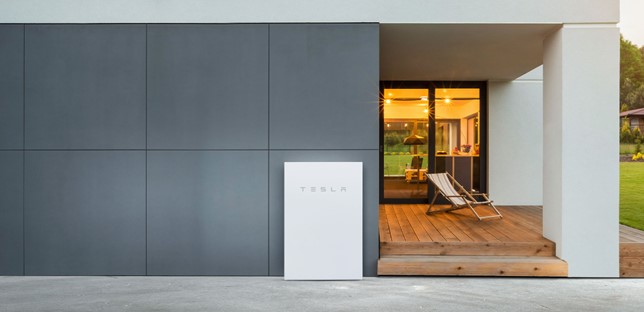
AC-coupled batteries tend to be more expensive than DC-coupled batteries because they must include an inverter to be able to export AC electricity directly from the battery into your installation. This price difference can be negated because most Feed-in-Tariff installs will require a hybrid inverter installation. The standard storage capacity of AC-coupled batteries tends to be larger than DC-coupled batteries. One popular AC battery is the Tesla Powerwall which has 13.5kWh of usable battery storage and can be supplied for around £6500 plus the cost of installation which is around £0.48 per watt-hour.
One popular DC-coupled battery is the Sunsynk 5.12kWh with a recommended usable capacity of 4.6kWh and can be supplied for around £2500 plus the cost of the installation. This battery can be connected in parallel so if you had two batteries with a total usable capacity of 9.2kWh and a price of £5000 plus the cost of installation which is around £0.54 per watt-hour.
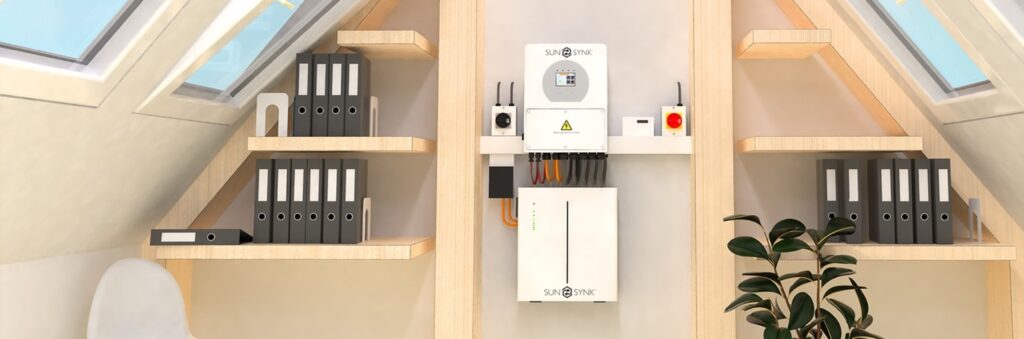
You can stack the DC-coupled batteries to a capacity that matches most AC-coupled batteries, but this will make the batteries a lot closer in price and the output will still be limited by the max output on the inverter.
Do I need to get DNO approval before I can add an AC-coupled battery to my Feed-in-Tariff solar installation?
In most cases Yes, as the limit to the capacity of the system that you can have is up to 3.6kW before approval is required before the installation of the equipment. Most AC-coupled batteries have a greater capacity than 3.6kWh and the output of the solar inverter must be taken into consideration which will in nearly every case take you above the 3.6kW limit. This is because both the solar inverter and the AC-coupled battery can output their maximum output power at the same time which could be all exported to the grid. If the total output of both the solar and the AC coupled battery is above 3.6kW then a G99 application will be required which can be done on your behalf by the installer. The reason for this is that the DNO will need to confirm whether the Grid supply to your property can cope with the additional capacity of electricity that you could export to the grid. The application usually takes 2 -3 weeks for approval from your DNO.
If you decide that you would like to add an AC-coupled battery to your home, it will not affect the Feed-in-Tariff meter so the rate you get paid for generation will not change.
Do I need to get DNO approval before I can add a DC-coupled battery to my Feed-in-Tariff solar installation?
No, you don’t need to get permission to add a DC-coupled battery to your solar installation because the battery is connected to the DC side of the inverter with the inputs for the solar. This means that the output of both the solar and the battery is limited by the inverter’s maximum output so this is the total power that can be exported to the grid.
If you decide that you want to add a DC-coupled battery to your Feed-in-Tariff installation, then it’s still wise to check with your FIT Licensee that it will not affect the rates you are paid before you get a battery installed.
What scheme has replaced the Feed-in-Tariff?
The Smart Export Guarantee has replaced the Feed-in-Tariff scheme in January 2020. The scheme is similar because it enables payments for exporting excess renewable electricity generated to the national grid. There are a few key differences between the two schemes which you should be aware of.
With the Feed-in-Tariff scheme, the rate offered was the same rate for everyone no matter which energy supplier you were with. People on the Smart Export Guarantee (SEG) have the rate set by their electricity supplier and this rate can vary considerably depending on which supplier you use.
Another difference between the two schemes is the fact that on the new SEG scheme, you won’t be paid an amount for the electricity generated. You are just paid for the amount of electricity that you have exported to the grid. This is calculated from readings taken from your smart export meter.
If I already claim feed-in tariff payments, can I apply for the Smart Export Guarantee too?
If you want to claim Smart Export Guarantee (SEG) payments, then you will have to give up your Feed-in-Tariffs export payments. Most FIT installations export payment is unmetered and is an assumed amount exported based on 50% of the total generation of your feed-in tariff installation. In these cases, if you are using more than 50% of your generated electricity inside your home, it could reduce your payments by moving to an SEG tariff which uses a smart meter. This can even be the case when the SEG tariff price per kWh is higher than your FIT tariffs export price.