The environmental and financial benefits of commercial solar panels are pronounced, it is still smart to weigh up the benefits and understand the installation process before proceeding.
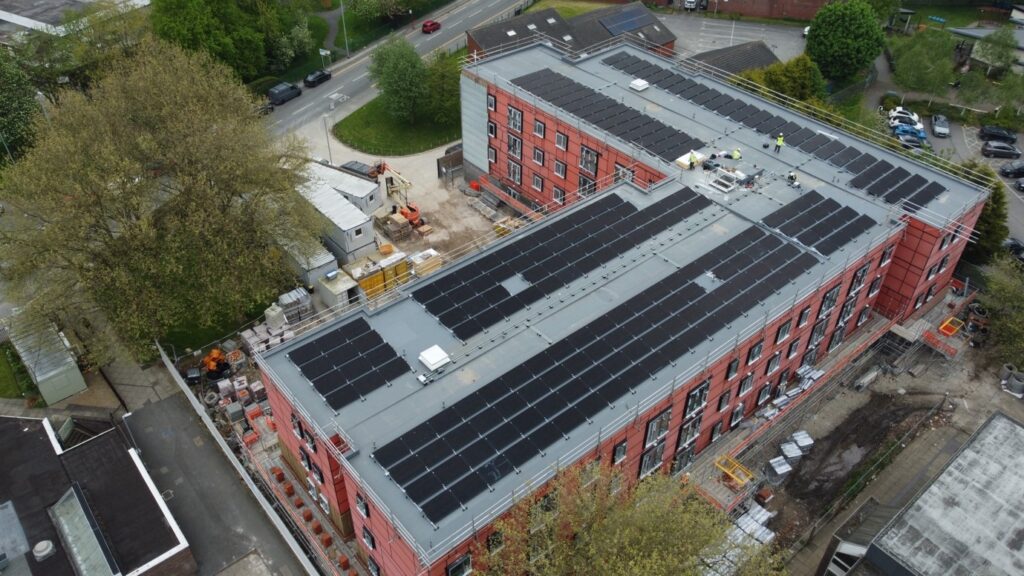
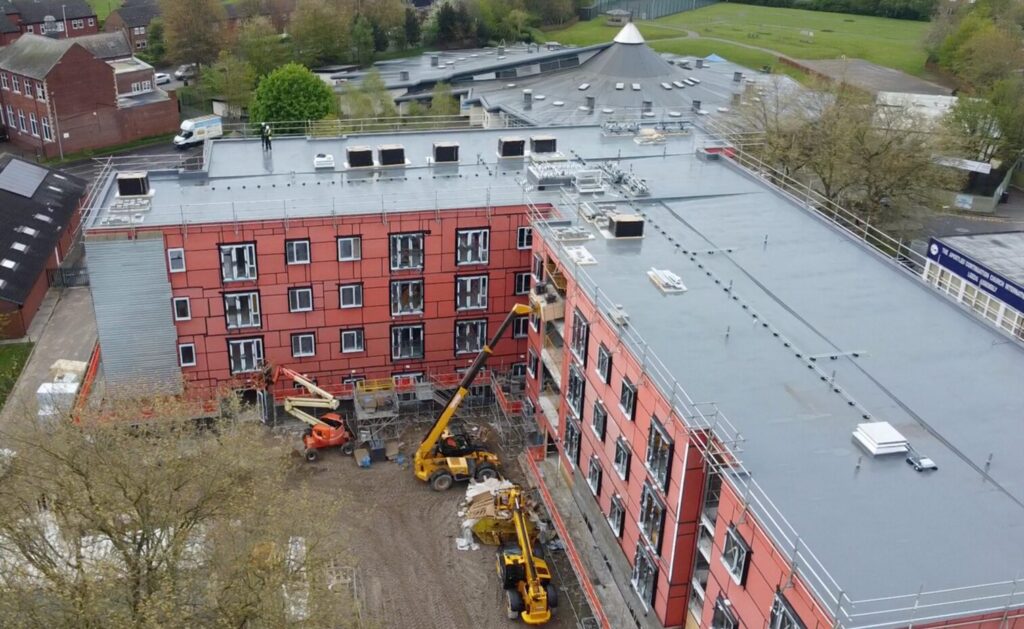
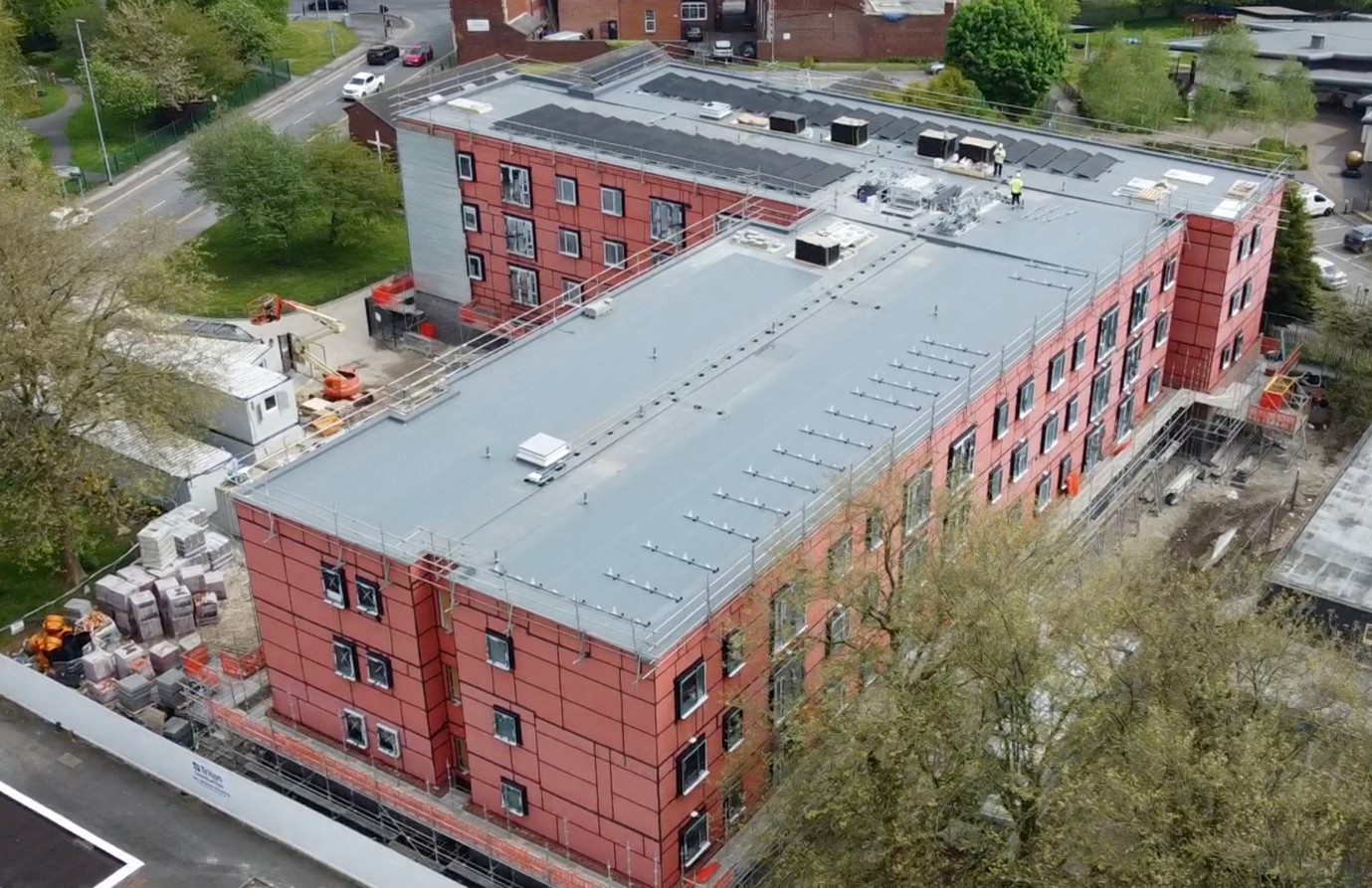
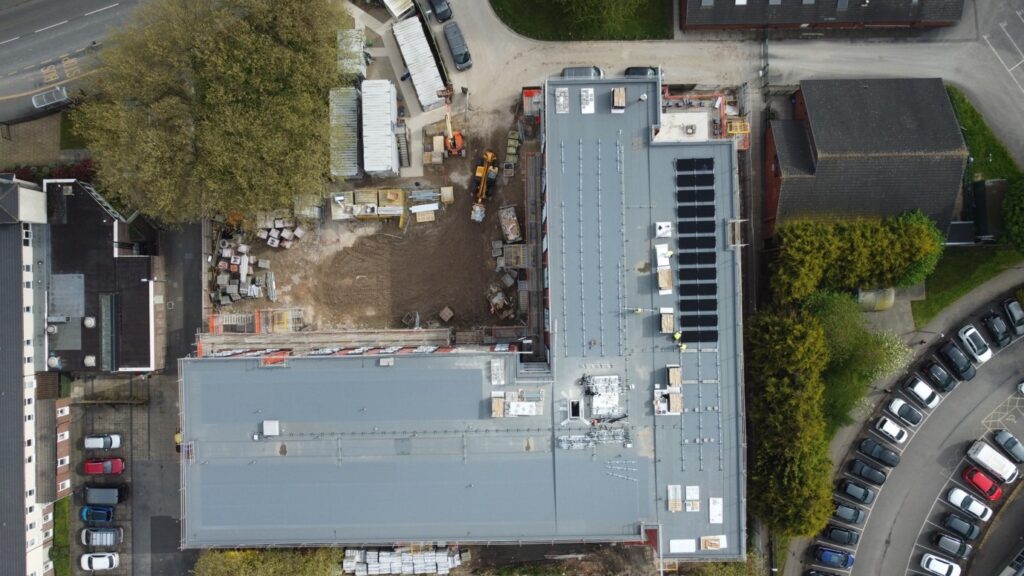
A recent commercial installation by My Green Electricity will be used as a case study.
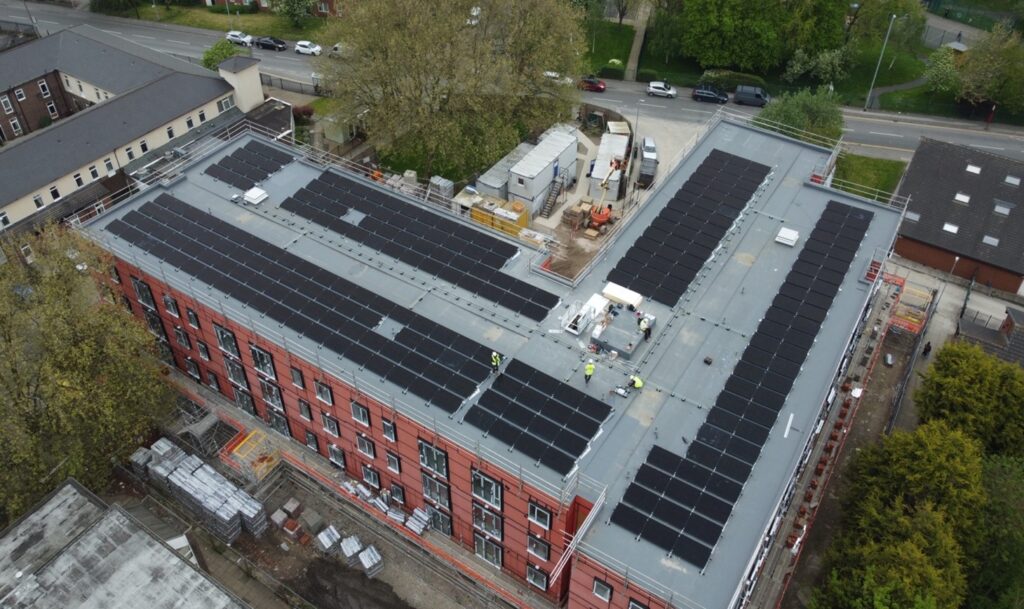
250 Panel installation on a flat roof.
Commercial solar panel installation process.
Depending on the size of your commercial property, there will be a number of steps to the process before you get to the installation
Here are the steps you will most likely need to take, though the order can vary depending on the company you use:
- Weight bearing and wind uplift calculations will need to be carried out to make sure that your building can actually support the solar panels- in some cases this may mean structural engineer being contracted to assess and sign off the location
A application will also need to be made to the DNO (District Network Operator), to ensure to local grid can support the additional electricity generated by the system
- Your energy use and what goals you have for the installation will be evaluated, to help decide on the size & design of the system.
- Blueprints and proposals will need to be drawn up for the exact specifications of your business and the commercial building.
- Once the proposal is approved, the installation process will be planned out then installed. This could take anything from a few weeks to months, depending on the scale of the project. Factor in some disruption to your regular business activities.
- The final stage is the commissioning phase. This is when the installer confirms that the commercial solar panels have been fitted correctly, and electrical checks are carried out. When complete, the installer will contact your district network operator to get your system connected to the electricity network.
Can you put solar panels on a commercial property?
The majority of commercial solar panels installations come under Permitted Development Permitted development rights allow you to carry out certain building works and changes of use without having to make a planning application.
Do businesses need planning permission for solar panels?
As highlighted above, planning permission is not necessary for most installations. However, certain exclusions exist- such as installations on listed buildings, flats, and conservation areas.
Are commercial solar panels worth it?
Absolutely, however while it is rewarding in the long term, a commercial solar panel installation is an investment. As commercial solar panels can produce electricity for up to 25 years and are better for the environment, there is no denying however that there is a significant investment to pay upon initial purchase.
How long do Solar Panels last?
How many years commercial solar panels last is determined by several factors like the quality of the panel. But in most cases, commercial solar panels will last for roughly 25 years before significant degradation starts to occur.
Recently, some of the better solar panels have offered warranties up to 30 years for performance and product warranties, as the technology improves
How much does a commercial solar panel system cost?
As of 2024, the average price for commercial solar installations ranged from £1000 to 1500 per kWP . For a medium-sized business that requires a 30kWp system, this translates to an estimated cost of £30,000 to £45,000.
How much does a 100kW solar system cost in the UK?
The answer is, it depends. There are several variables such as the system size, your energy requirements, and the available roof space. On average, for a 100kW solar system in the UK, businesses might be looking at an investment range of around £60- 90,0000
Capital Allowance
Solar panels are allowable for Capital Allowance purpose and the expenditure qualifies in the Special Rate Pool
https://www.gov.uk/hmrc-internal-manuals/capital-allowances-manual/ca22335
- Expenditure on the provision of the panels must be on or after 1 April 2012 (corporation tax) or 6 April 2012 (income tax).
- There is no distinction between solar panels installed on a new build property and solar panels installed as part of a refurbishment / retro fitting.
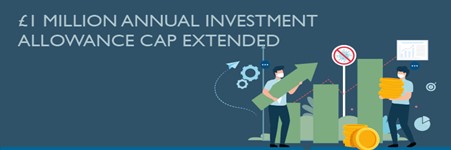
If the claim is made in an open tax year and Annual Investment Allowance is available etc. there’s a 100% allowance for that year. 50% FYA allowances will also apply if expenditure qualifies as it’s SR Pool expenditure.
How do you figure out the size of a commercial solar system?
To figure out how to size your solar system, take your daily kWh energy requirement and divide it by your peak sun hours to get the kW output. Then divide the kW output by your panel’s efficiency to get the estimated number of solar panels you’ll need for your system.
What is the downside of solar panels UK?
Solar PV panels need lots of space, some roofs don’t have the required space, or are designed and oriented in a way that is not ideal for panels. With commercial installations in mind, more space is needed to meet the requirements. As such issues with the roof space may mean solar is not the optimum solution for all commercial building.
Some roofs also have obstacles like windows that could influence how much solar panels you can install. This problem occurs less with solar panels for flat roofs, that said, some flat roofs use the space for other infrastructure to save space inside, so that is not a given.
What is the SEG scheme?
If you generate renewable electricity in your home or business, you can feed back into the grid any electricity that you don’t use. Under the Smart Export Guarantee ( SEG ) you will be paid for every unit of electricity that you feed back.
Does SEG apply to businesses?
The Smart Export Guarantee (SEG applies for all British businesses and homes who have installed renewable or low carbon technologies. Speak to your energy provider to find out exactly what rates they offer, its also a smart idea to speak to your installer as they will be able to advise what the best rates available out there are.
Consider long-term savings
You may also want to consider how much money you could save after they are installed. Although it may take a while to recoup the upfront installation costs – commercial solar panels are a long-term investment – over time, you should hopefully end up in the green.
What starts as a few pence per kilowatt hour can add up to hundreds and thousands of pounds in savings per year.
You’ll break even more quickly if you are eligible to benefit from a Smart Export Guarantee tariff and sell your energy to the grid.
Most companies will provide you with clear reports with estimates on the return on investment for the lifetime of the installation, providing a clearer picture of what to expect.
To conclude – Commercial solar panels, are they worth it? Yes!
Having solar panels installed at your business has many benefits, there are several factors to consider as highlighted in this document, however speaking to a solar panels company and getting a free assessment of your business makes great sense!