
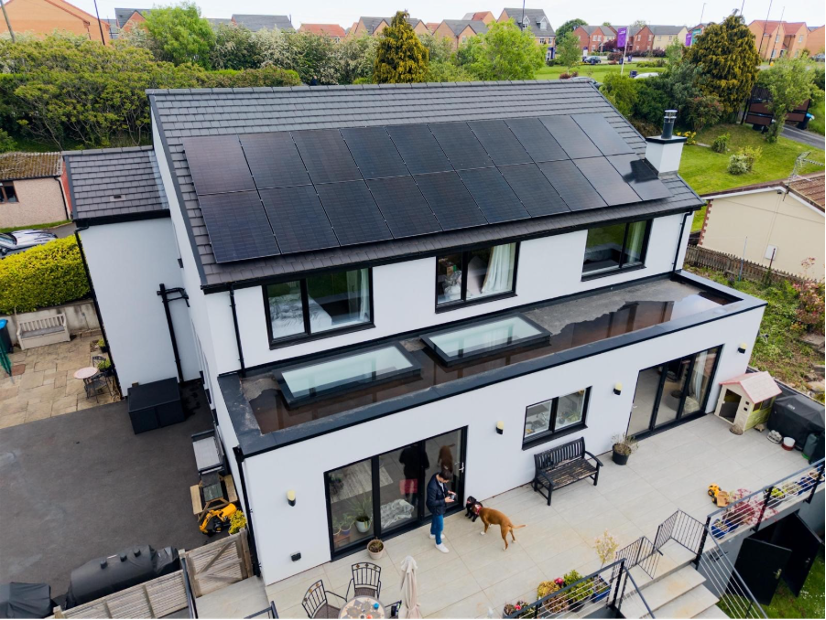
If you live in Yorkshire and you’re wondering whether solar panels are really worth it, the honest answer is: for many homes, yes, they absolutely can be.
A lot of people assume solar only makes sense in sunnier place, with Mediterranean-style weather, and longer days. In reality, solar panels generate electricity from daylight rather than heat, which means they can still work very well in Yorkshire’s milder climate. Solar panels still generate electricity on cloudy days, which is good news, because we have lot of them.
The real question is not whether solar works, but whether your roof, your energy use and your system design make it a smart long-term investment.
The average UK home solar system costs around £6,100 to install, and our systems cost between £3000 and £10000 depending on the size and difficulty of the installation. So, can they still pay off in Yorkshire?
| Comparison | Assumption used | Estimated annual generation (kWh) | Approx. gross electricity value* | Share of a UK 3-bed home’s electricity use |
| 6-panel system in Yorkshire | Sheffield yield: 947 kWh/kWp/yr | 2,557 kWh/yr | £668/yr | ~80% |
| 6-panel system in South of England | Southampton yield: 1,066 kWh/kWp/yr | 2,878 kWh/yr | £751/yr | ~90% |
| Typical UK 3-bedroom home | Rough guide: 3,200 kWh/yr electricity use | £836/yr if all bought from grid | 100% |
In practical terms, a 6-panel system in Yorkshire covers around four-fifths of a typical 3-bedroom home’s annual electricity use, while the same system in the South of England might get close to nine-tenths.
How do solar panels work?
Solar panels, also known as photovoltaic or PV panels, capture energy from sunlight and convert it into electricity for your home. The solar cells inside the panels absorb daylight, create an electrical charge, and generate direct current electricity.
An inverter then converts that into alternating current electricity, which is what your household appliances use. Solar panels do not need high temperatures to work, and they do not stop working just because the weather turns cloudy.
This is important in Yorkshire because one of the biggest myths we hear is that solar panels are ineffective in northern parts of the UK. In reality, a well-designed system can still make a meaningful dent in your electricity bills, especially if your roof has good exposure and limited shading. South-facing roofs with minimal shade usually perform best, while east- and west-facing roofs can still work well too.
The affect of Yorkshire weather on solar panel performance
Weather does affect solar performance — but not in a way that you may think.
Cloud cover reduces the amount of sunlight that reaches the panels, so output will be lower on dull days than on bright ones. Short winter days also mean lower generation in late autumn and winter. But solar panels still produce electricity throughout the year, and cooler conditions are not necessarily a disadvantage.
In fact, solar panels rely on light rather than heat, so Yorkshire’s milder temperatures are not the problem people often think they are. Panels still work on cloudy days, while long-term PV performance guidance shows that higher cell temperatures can reduce efficiency.
In practice, the bigger factors are usually shade, roof orientation, usable roof area, battery storage and how much electricity you use during the day. On our installation guidance, we explain that household occupancy, tariff information, roof space and battery storage all make a difference to projected returns, and that a battery can improve overall efficiency by storing daytime solar power for later use.
How much sun does Yorkshire actually get?
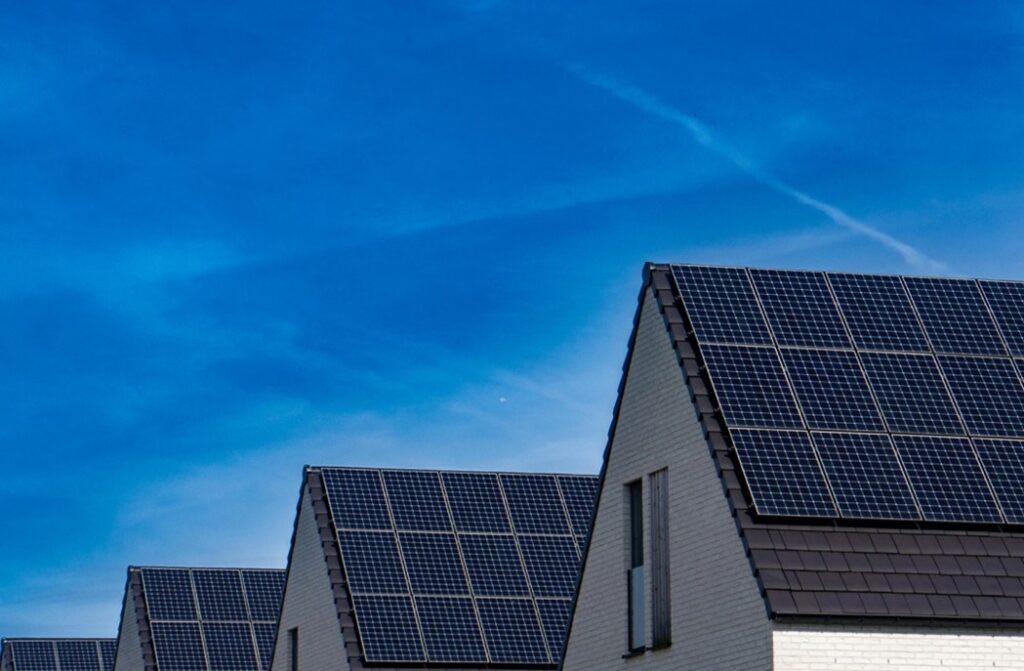
It’s safe to say that Yorkshire isn’t the sunniest part of Britain, but it gets more than enough daylight for solar to be worthwhile on the right property.
A useful local benchmark is Sheffield. According to Met Office long-term climate averages for 1991–2020, Sheffield receives 1,485.01 hours of sunshine per year on average. With a high of 192.03 hours in July, and a low of 49.94 hours in December.
A good rule of thumb is 1 hour of sunlight will produce 1 kw/h of solar power. In December, you’ll receive around 7 days of electricity use vs. 25 days in the Summer.
That seasonal pattern is why we always encourage homeowners to think about annual performance rather than judging solar purely by a gloomy January afternoon. Solar is a year-round system, but it will do most of its heavy lifting from spring through early autumn. A battery can help you make better use of that generation by storing surplus electricity for the evening, when many households need it most.
What can you realistically expect from solar panels in Yorkshire?
This is where expectations matter.
Solar panels are not a magic switch that wipes out every electricity bill overnight. What they do is reduce the amount of electricity you need to buy from the grid. The more of your own solar power you use directly, the more valuable the system becomes.
A well-designed system can save many homeowners roughly £700 to £1,500 per year, depending on system size, energy usage and layout.
With the average electricity unit rate for a typical household on a standard variable tariff paying by Direct Debit is 26.11p per kWh, with an electricity standing charge of 57.19p per day. The overall typical dual-fuel bill under the price cap rose by 13% for that period. The more of that grid electricity you can avoid buying, the more attractive solar becomes.
What do our real Yorkshire installs show?
One of the best ways to answer the question “Are solar panels worth it in Yorkshire?” is to look at projects we’ve worked on.
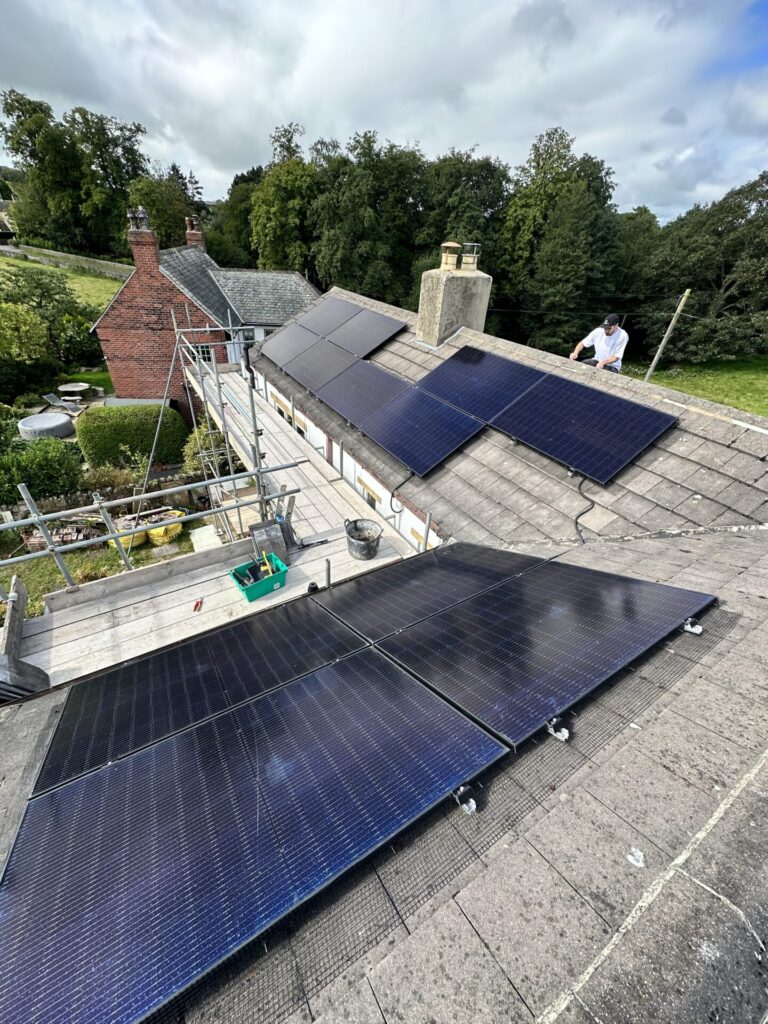
In Harrogate, we designed and installed a 9kW / 20-panel on-roof solar system with 10.4kWh battery storage for a detached home. The system is expected to cover 74% of the property’s annual energy usage, save £2,114 per year, and generate a further £1,077 by exporting electricity back to the grid. Based on projections, the customer is expected to be net-zero for energy costs over a year, with a payback period of around five years.
In Leeds, we designed and installed a 7.92kW / 18-panel system for a detached house as part of a restoration and extension project. That system is expected to cover 32% of annual energy usage, save £1,697 per year, and generate a further £736 through exported electricity. Again, the projected payback period is around five years, with decades of generation beyond that.
Smaller systems can be valuable too! We recently fitted an 8-panel system in with a 15 kw/h battery to a semi-detached home in Doncaster. This generates 3017 kWh per year, from 974 sunshine hours, estimated to cover 100% of the family’s energy.
That is why we design every system around the home rather than treating solar as a one-size-fits-all product. Every system is designed to fit the roof, energy needs and budget of the customer.
Are the savings worth the upfront cost?
For many homeowners, yes — especially if you are planning to stay in the property for several years.
Energy Saving Trust says the average home solar system costs around £6,100, while our own prices range from under £4,000 for smaller systems to over £7,400 for larger 20-panel installations before any additional battery considerations.
Many systems can pay for themselves in as little as four to ten years, depending on system design and energy use.
The best returns usually come when:
- your roof has good daylight exposure and minimal shade
- you use a fair amount of electricity
- someone is at home during the day
- you add battery storage where it makes sense
- you plan to stay in your home long enough to enjoy the long-term return.
The homes where solar tends to be less compelling are those with heavy shading, unsuitable roof space, very low electricity use, or short ownership plans. That does not mean solar is a bad technology — only that it has to be matched properly to the property. That is why we focus on honest assessments rather than blanket promises. On our website, we explicitly say we give straightforward advice without the hard sell.
Our honest view: are solar panels worth it in Yorkshire?
Yes — in many cases, they are.
Yorkshire may not offer perfect blue skies all year round, but that is not what solar panels need. They need daylight, sensible design and realistic expectations. With long summer days, solid annual sunshine totals, rising grid electricity prices and modern battery options, solar can make a genuine difference to household energy costs here. Met Office climate data shows that Yorkshire locations such as Sheffield receive substantial annual sunshine, Energy Saving Trust confirms that solar panels work on cloudy days, and our own Yorkshire installs show that real households can save hundreds or even thousands of pounds a year.
From our perspective, the question is not really whether solar panels work in Yorkshire. They do. The better question is whether they are right for your roof, your usage and your goals. When those things line up, solar can be one of the smartest long-term upgrades you make to your home.
If you want a clear idea of what solar could look like for your property, we offer an honest assessment based on your roof, your usage and your budget.
We also have a solar estimator on our site, alongside our solar panels page, battery storage page, FAQs, installation guidance and case studies, so homeowners can compare options before making a decision.