
For homeowners asking whether solar panels on flat roofs are possible, the short answer is yes. In many cases, flat roofs can be a very good option for solar. Without the constraints of a pitched roof, the panels can be set at the perfect angle to maximise their energy generation.
The important point is that flat-roof systems need the right mounting design, structural checks and layout to perform well and remain compliant. Flat roofs need extra considerations around structural stability, wind lift and weathertightness.
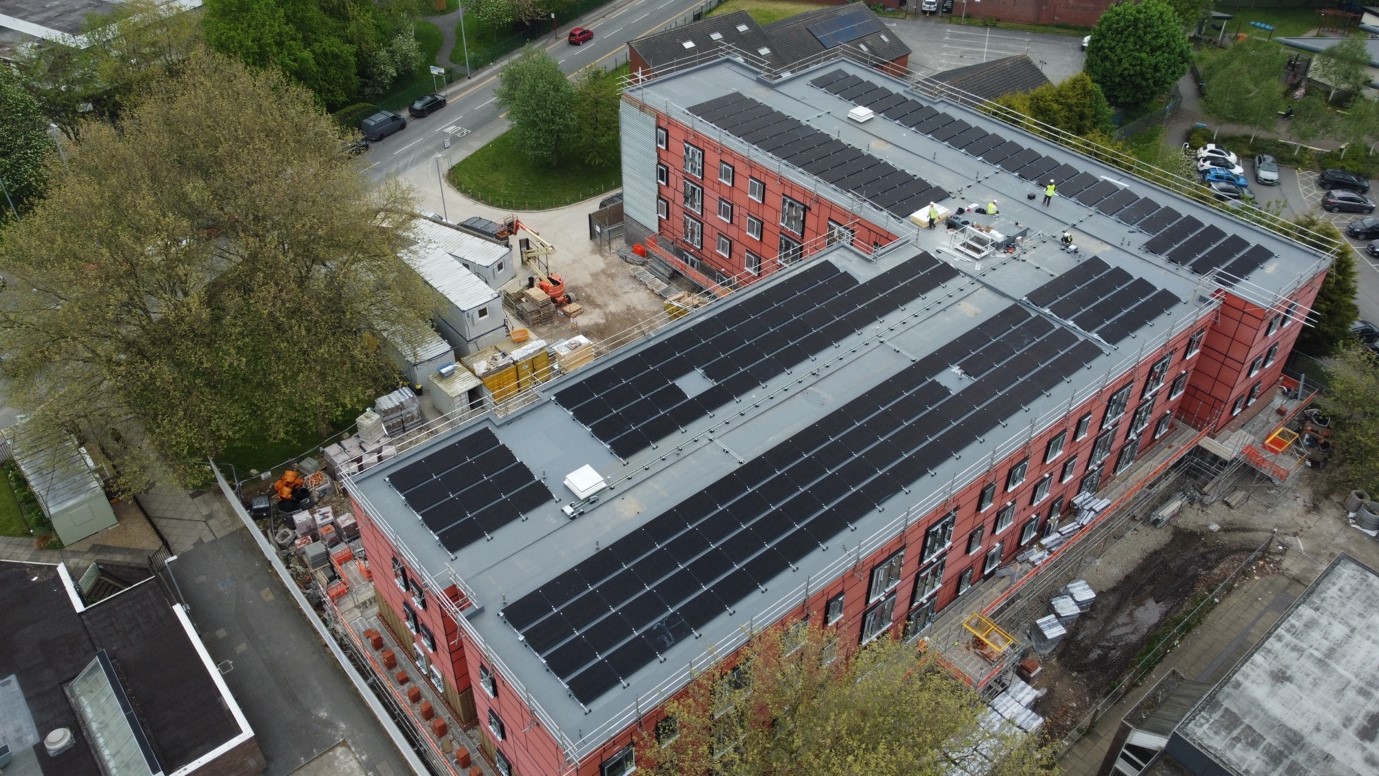
Can solar panels be fitted on a flat roof?
Yes, solar panels can often be fitted on a flat roof. On flat roofs, panels are usually installed on mounting frames that set them at an angle, rather than lying completely flat. That helps improve exposure to sunlight and allows the installer to design the array around the roof space more effectively.
That said, flat roof solar is not a one-size-fits-all installation. The roof structure, waterproofing, wind exposure, usable space and any nearby shading all need to be assessed properly before a system is recommended. This is why we recommend a survey-led approach and design systems around the property rather than pushing a standard layout onto every home.
Effectiveness of Solar Panels on Flat Roofs
The good news is that solar panels can be very effective on flat roofs, when they are designed correctly. Solar panels work from daylight and still generate electricity on cloudy days, and a flat roof doesn’t change that.
A flat roof can even be better than a pitched roof, as they offer more flexibility. For example, the mounting system can be used to set the panels at a more suitable angle and direction than a pitched roof would otherwise allow.
Solar generally performs best on a south-facing roof with minimal shading, so having some control over tilt and orientation can be a real advantage.
Basically, effectiveness comes down to good design rather than roof type alone. A poorly planned flat roof array may lose performance through shading between rows, wasted space or a compromised layout. A well-designed one can perform very strongly and make excellent use of available roof area. That is why the right system for your home matters far more than whether the roof is flat or pitched.
How flat roof solar panels are installed
On a pitched roof, panels usually follow the roof’s existing slope. On a flat roof, they are normally mounted on angled frames. This lets installers create a layout that is better aligned with sunlight, but it also introduces more design considerations. The system has to be structurally secure, resistant to wind uplift and installed in a way that preserves the roof’s weathertightness.
That is one reason homeowners should always use an experienced installer rather than treating flat roof solar as a simple add-on. We already build system design around roof shape, usable space, shading, electricity usage and long-term performance. That approach is especially important on flat roofs, where the mounting and spacing decisions have a major effect on results.
Common Issues with Flat Roofs
1. The roof structure must be suitable
A flat roof may look like an easy place to install solar, but the structure still has to be capable of supporting the system safely. A roof’s ability to carry the load must be checked and proven, and some roofs may need strengthening work.
That means the first question is not “Can panels physically fit here?” but “Is this roof suitable for them?” A professional survey is essential, particularly on extensions, garages and older flat roofs where the construction may vary.
2. Wind uplift is an important factor
Because flat roof systems are raised on frames, wind becomes a more important design issue. The MCS (UK’s quality mark for green technology) has solar mounting standard that specifically addresses the need for structurally stable fixing and appropriate resistance in the mounting system. If you place the panels too close together, they can act as a giant sail in high winds, and cause damage to your roof and the solar system.
The layout, the mounting method and the position on the roof all need to be selected properly to keep the installation safe and durable.
3. You may not be able to use all the roof area
One common assumption is that a flat roof can be covered edge to edge with panels. In practice, that is not usually how it works. Panels on flat roofs need spacing between rows so they do not shade each other, and margins are also needed for safe layout and roof protection. Margins around installations matter too because these can help avoid wind lift and improve water run-off, which is key on flat roofs.
So, while a flat roof can be excellent for solar, the usable area is often smaller than the total roof footprint. This is another reason why proper system design matters more than assumptions based on roof size alone.
4. Waterproofing and drainage must be protected
Flat roofs rely heavily on good waterproofing and drainage, so any solar installation must work with the roof rather than against it. A proper solar mounting system must ensure the roof remains weathertight and continues to meet building regulation requirements.
5. Planning and compliance still matter
Many domestic solar installations can fall under permitted development, but that does not mean every flat roof installation is automatically exempt from planning concerns. Residential solar may be permitted development, while building regulations normally still apply. A reputable installer should help you understand any height, structural and installation requirements before work begins.
Stick to the Fundamentals
The same fundamentals that affect any solar system also apply to flat roofs:
- sunlight
- orientation
- tilt
- shading
- system design
Generally, solar panel systems perform best on a south-facing roof with little to no shading.
Maximise the Effectiveness with Battery Storage
In many cases, battery storage systems can help maximise the return from your solar panels.
Panels generate electricity during daylight hours, but many households use more electricity later in the day, once they’ve got home from work or school. Adding a battery can let you store some of that generation for later use, improving how much of your own electricity you actually use at home. This can also help improve independence from the grid.
Battery storage is not essential for every solar installation, but it can make a flat roof system even more practical, especially for households that are out during the day. Again, the right answer depends on the home, not on a standard sales package.
Final thoughts
So, can solar panels be fitted on a flat roof? In many cases, absolutely. And can they be effective? Yes, they can be highly effective when they are designed around the roof structure, available space, shading, compliance requirements and your household’s energy needs.
At My Green Electricity, we believe the best solar system is the one that is right for your home. Whether you have a pitched roof, a flat roof or a more complex layout, we take the time to assess the property properly and recommend a system built around long-term performance, not guesswork. To find out more, get in touch for a quote.